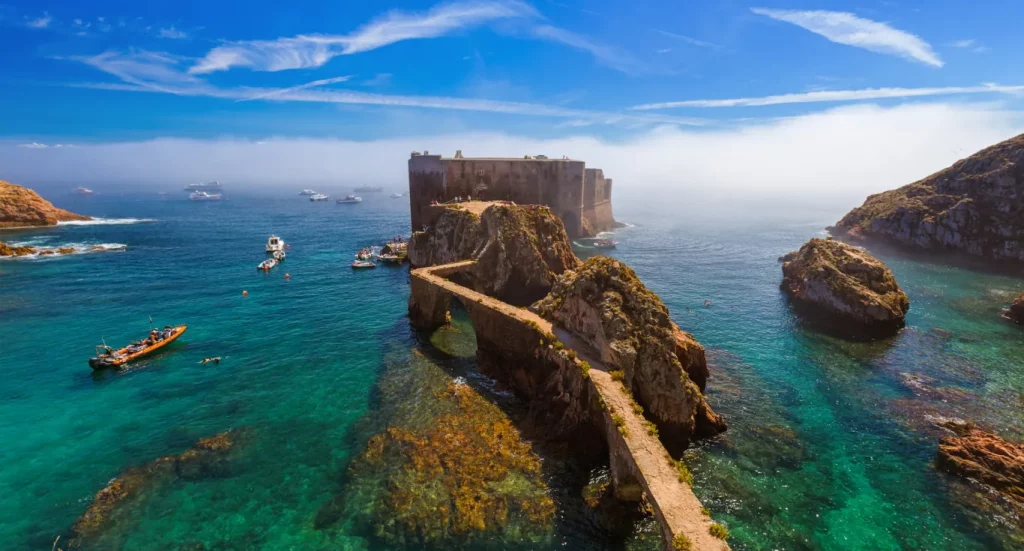
The Berlengas Biosphere Reserve, which includes the Berlengas Natural Reserve created in 1981, possesses biological, geological, and landscape values of exceptional importance. As such, it is protected by a set of community, national, and international nature conservation guidelines.
Due to its geographic location and the influence of both Mediterranean and Atlantic climates, the Berlengas host a very rich natural heritage, particularly in terms of ichthyological diversity.
Notably, the short-beaked common dolphin (Delphinus delphis), listed in Annex II of the Bern Convention and Annexes II and IV of the Habitats Directive, and the dusky grouper (Epinephelus marginatus), classified as an endangered species by the IUCN Red List due to being primarily targeted by spearfishing, deserve special mention.
The Berlengas Biosphere Reserve is also an important nesting and migratory passage site for seabirds. The yellow-legged gull (Larus cachinnans) is one of the seabird species that nests in the Berlengas Archipelago.
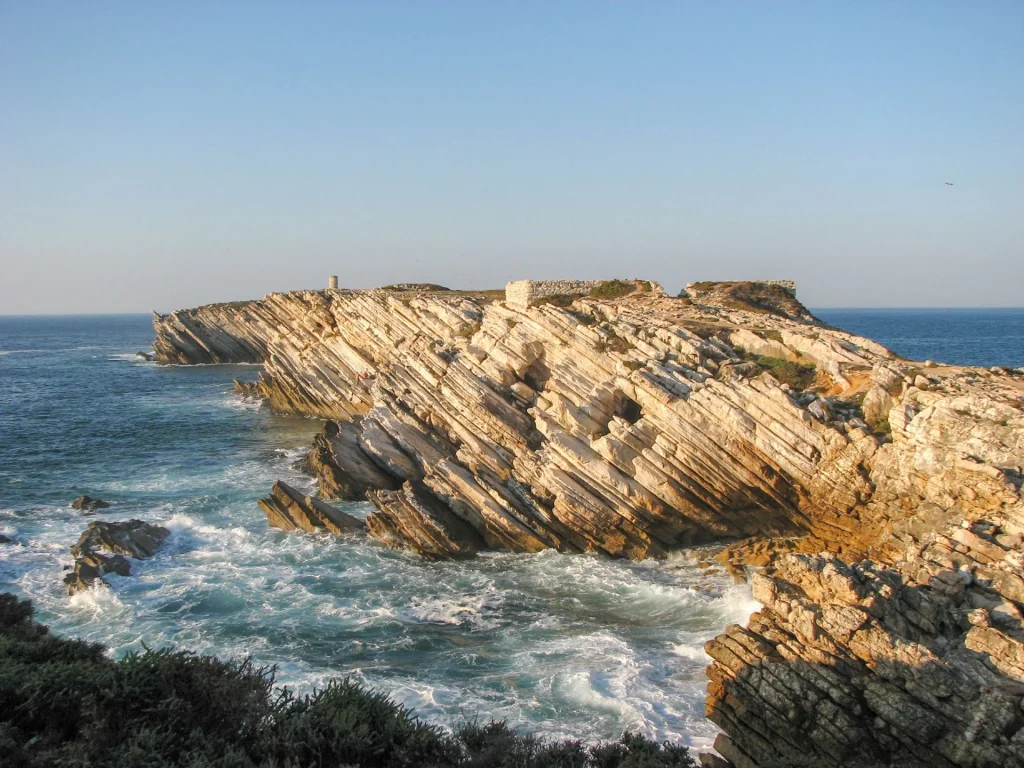
The Oeste UNESCO Global Geopark (OG), located in central-west Portugal and spanning six municipalities, is a region rich in geological and cultural heritage. Its landscape, shaped over 200 million years, records the formation of the Atlantic Ocean and is notable for its diverse geodiversity and paleontological treasures, including 13 recognized dinosaur species. The territory has long been studied by national and international scientists, with key geological sites such as “Ponta do Trovão” internationally recognized.
The region’s geology has also influenced human settlement, from Paleolithic caves to Roman agricultural systems and modern coastal communities. This connection between geology, landscape, and culture has fostered a distinct local identity. Today, OG’s municipalities follow a sustainability-driven strategy, earning global recognition through eco-labels and protected coastal areas.
OG is currently expanding to include Alenquer, Óbidos, the Berlengas Archipelago, and adjacent marine areas, enhancing its representation of geological diversity and strengthening links between terrestrial and marine ecosystems.